Research Area: ALD Mechanisms
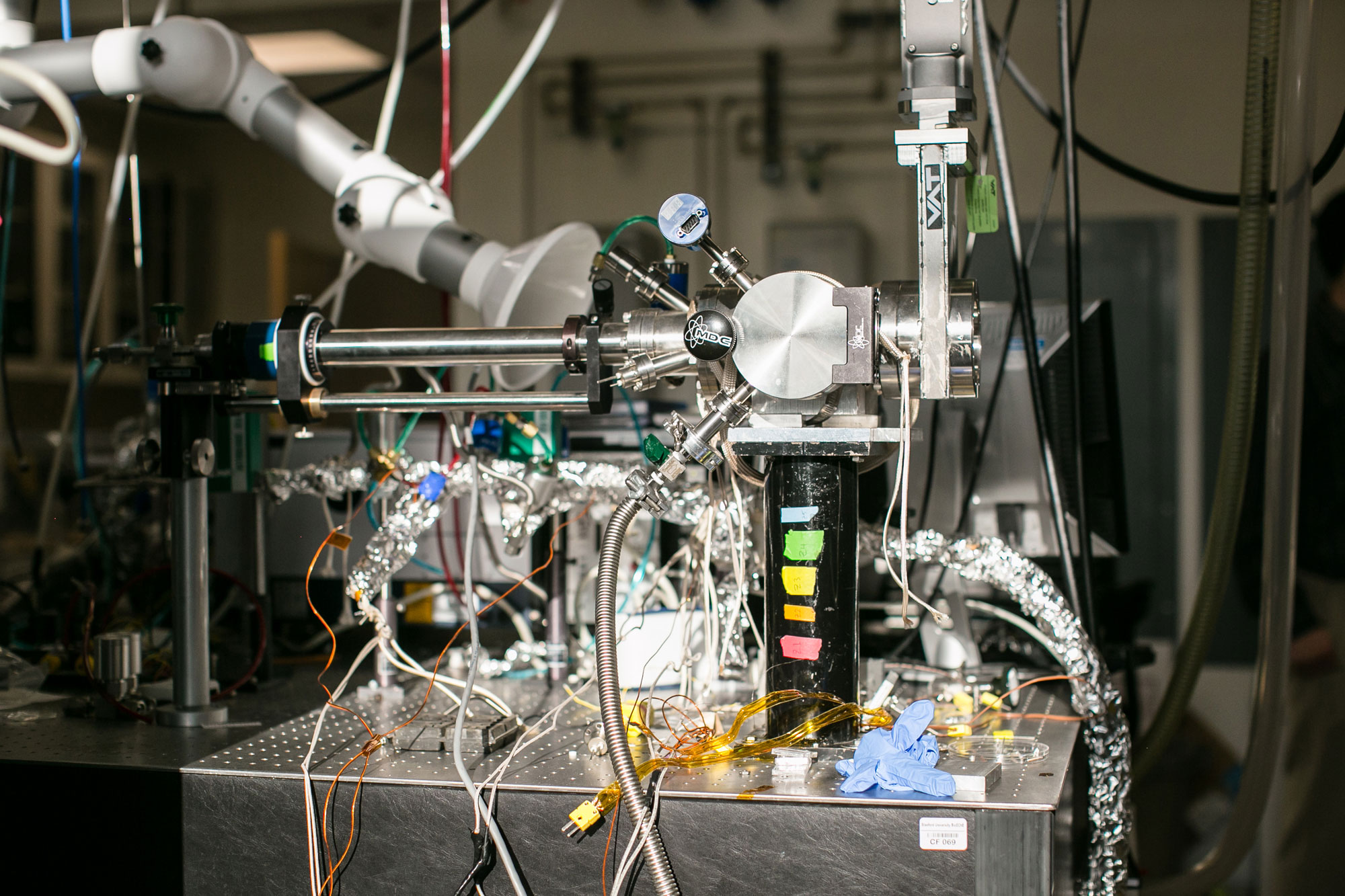
To enable expansion of ALD into more complex classes of materials, it is critical to understand its underlying chemical mechanisms. Using a range of custom-built in situ tools, synchrotron-based experiments, and theory, our group studies the chemical reactions driving ALD growth phenomena to better inform process design, precursor chemistry, and materials development. Nucleation is one of the greatest challenges in metal ALD. Many metal ALD processes exhibit island growth on low surface energy substrates, so we are also modifying surface chemistry to enhance nucleation, enabling deposition of high-quality continuous metal films at low thicknesses. We carry out in situ studies of the initial stages of ALD to elucidate the mechanisms of film nucleation and growth using a combination of laboratory- and synchrotron-based experiments and theory.
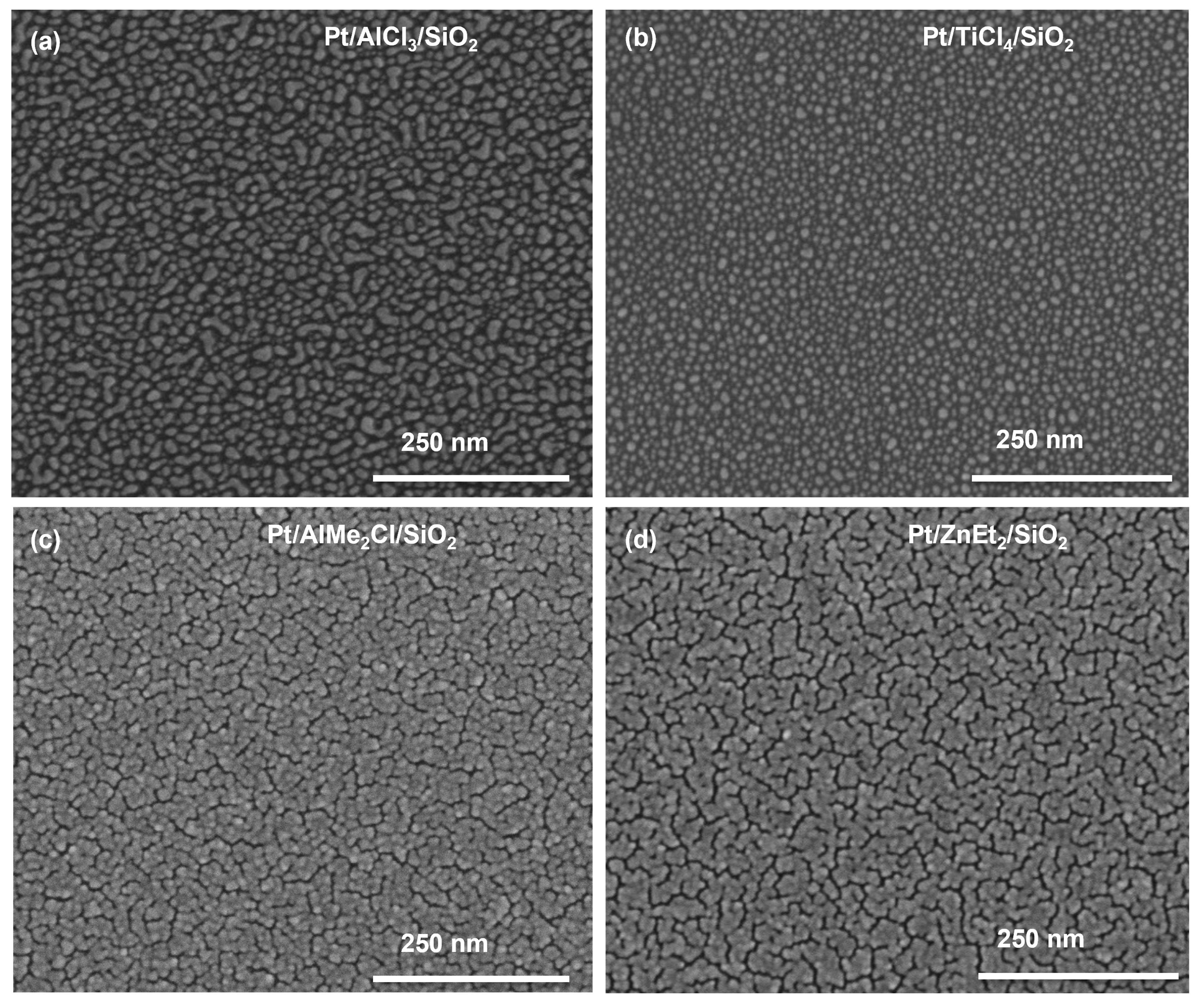
Above: Top: Schematic of nucleation enhancement process for Pt ALD. Bottom: Comparison of Pt film morphologies, with less sparse depositions achieved using treatments that can participate in the mechanism in the top figure.

Above: ALD and MLD, conventionally established on silicon substrates with planar or patterned morphologies for microelectronics. However, the emerging demand for advanced coatings in energy applications is steering the field of ALD and MLD toward more complex materials and substrates with complicated surface chemistry and intricate morphologies, such as porous membranes, composite electrodes, secondary particles, and 2D materials, where new challenges and unknowns are encountered.
Cho, D'Acunto, Nanda, and Bent Nanotechnology 2025, 36, 182002. https://doi.org/10.1088/1361-6528/adbd49
In parallel, we employ multi-pulse ALD strategies to probe precursor adsorption and reaction pathways in the very first few cycles. Using advanced in-situ diagnostic techniques such as FTIR spectroscopy and ellipsometry, we directly monitor molecular interactions and film evolution in real time, providing mechanistic insights that guide the development of new ALD processes.

Above: (Left) Schematic of the ALD system with in situ IR capability. (Right) ALD with the in situ ellipsometry setup.